
A Signature Moment for Chicago Deep Tech
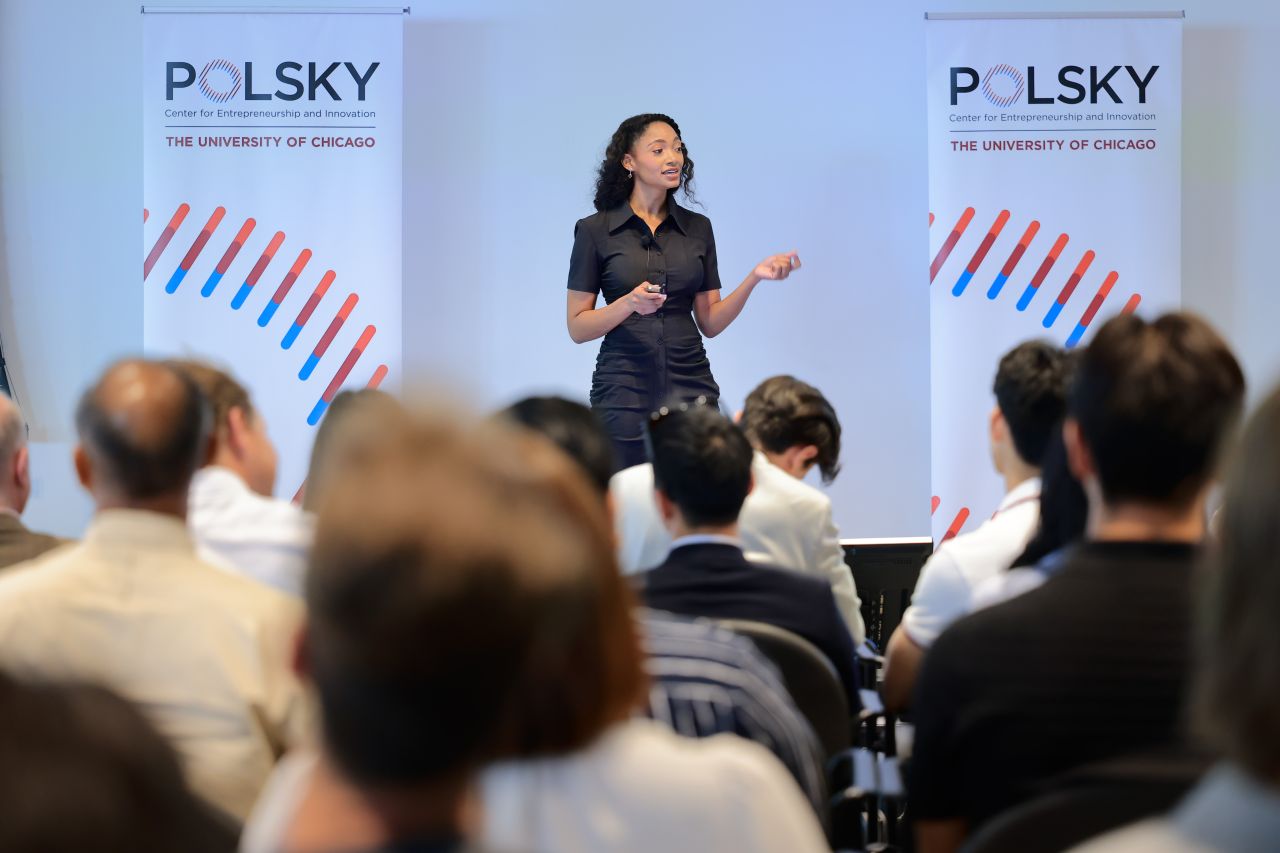
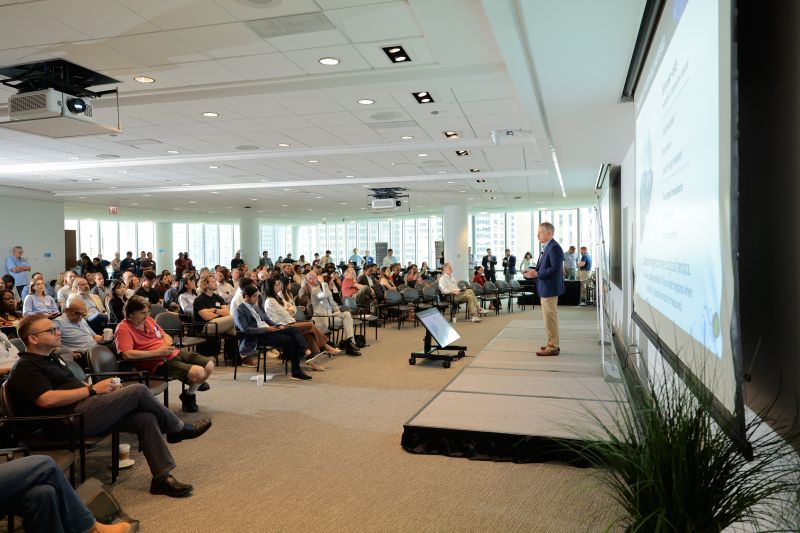
The Polsky Center for Entrepreneurship and Innovation at the University of Chicago has served as a launchpad for some of the Midwest's most consequential technology companies. Its annual Deep Tech Demo Day, held this year at the Gleacher Conference Center on July 20, brought together founders, investors, and industry leaders for live pitches spanning cleantech, quantum computing, data science, and healthcare technology (healthtech).
CareLumi was selected for the Healthcare pitch slot, one of three categories showcased at the event. Shai Basys, CEO and Co-founder, took the stage to make the case that the administrative layer sitting beneath healthcare delivery is not a process problem. It is a technology problem, and it has a computable solution.
The Problem: 400 Pages, a Broken Error Rate, and Months of Delay
Most people outside healthcare operations have never seen a primary source verification (PSV) package, the documentation required to confirm a clinician's credentials with payers, health systems, and state licensing boards before that provider can see patients and generate revenue. The numbers are striking.
Healthcare's Administrative Burden, by the Numbers
Select any figure to see the full context. All figures are from CareLumi's analysis presented at UChicago Deep Tech Demo Day, July 2026.
A single provider's primary source verification (PSV) package, the documentation required to confirm a clinician's credentials with payers, health systems, and licensing boards, can run approximately 400 pages. That volume makes manual review slow and error-prone by design.
According to CareLumi's analysis, a single provider package can run approximately 400 pages, and approximately 85% of those packages contain at least one error before they reach a reviewer. Each error sets off a correction cycle: back-and-forth communication with the payer, the state licensing agency, or the health system's credentialing committee. That cycle can delay a provider's enrollment by up to 8 months.
The problem is not episodic. A single provider may face up to 45 distinct credentialing and compliance events across a 12 to 36-month cycle: license renewals, payer re-credentialing cycles, federal and state exclusion database checks, continuing medical education (CME) tracking, and hospital privilege renewals, each with its own deadline, documentation requirement, and submission channel.
Up to 45 Events per Provider, Every 12 to 36 Months
Six categories of recurring compliance work. Select any to see examples.
The cumulative effect is a system in which providers and their administrative teams spend enormous effort on work that, if done correctly the first time, would be nearly invisible. The costs are real: delayed enrollment means delayed revenue for a provider who is already licensed and trained and ready to see patients.
CareLumi's Approach: Continuous Verification, Not Periodic Correction
CareLumi's agentic solutions are designed to attack the error rate, not just the workflow. The CareLumi CVO (credentials verification organization) platform automates the intake, verification, and ongoing monitoring work that generates the friction, so that by the time a provider package reaches a reviewer or a payer, it is complete and accurate.
Rather than treating credentialing as a periodic event, the platform maintains a continuous verification state for each provider. License expirations, exclusion database changes, and re-credentialing deadlines are monitored on an ongoing basis, with automated follow-up where payer and licensing channels permit. The result is a workflow that is designed to maximize first-pass accuracy, which is the rate at which a submission is accepted without a correction cycle.
The business impact flows directly from that accuracy. A provider whose enrollment is not delayed by administrative errors generates revenue sooner. A practice that does not employ a dedicated credentialing coordinator to manage correction cycles operates at lower overhead. A health system whose provider verification files are always current does not face audit exposure from outdated credentials.
Why Deep Tech? Why Now?
The Polsky Center's Deep Tech Demo Day is deliberately designed for companies solving durable infrastructure problems, not surface-level workflow tools. Healthcare credentialing and compliance automation fits that frame precisely. The regulatory environment governing provider credentials, the 42 CFR standards for laboratory directors, the CMS-855 enrollment forms, and the National Plan and Provider Enumeration System (NPPES) for provider identifiers, does not simplify over time. It expands.
CareLumi's pitch argued that the only durable response to that expanding complexity is a platform that models the regulatory structure computationally and updates as the rules change, rather than one that relies on human administrators to track changes manually. That argument resonated with the investor and industry audience in the room.
What Comes Next
The Demo Day appearance marks a moment of visibility for CareLumi at the intersection of the University of Chicago's innovation ecosystem and Chicago's broader deep tech community. The company is actively engaging with healthcare organizations, provider groups, and independent clinical laboratories looking to move their credentialing and compliance workflows off manual processes and onto the platform.
For practices and health systems evaluating their administrative infrastructure, the question Shai posed on stage is worth sitting with: if approximately 85% of provider packages contain errors, and each error costs weeks or months of delay, what is the accumulated cost of a system that accepts that as normal?
CareLumi's answer is that it does not have to be normal. The platform is designed to eliminate those errors before they reach a reviewer, and to maintain a continuous compliance state so that the next renewal cycle does not restart the same correction loop. That is the case the company made in Chicago, and it is the direction the platform is built toward.